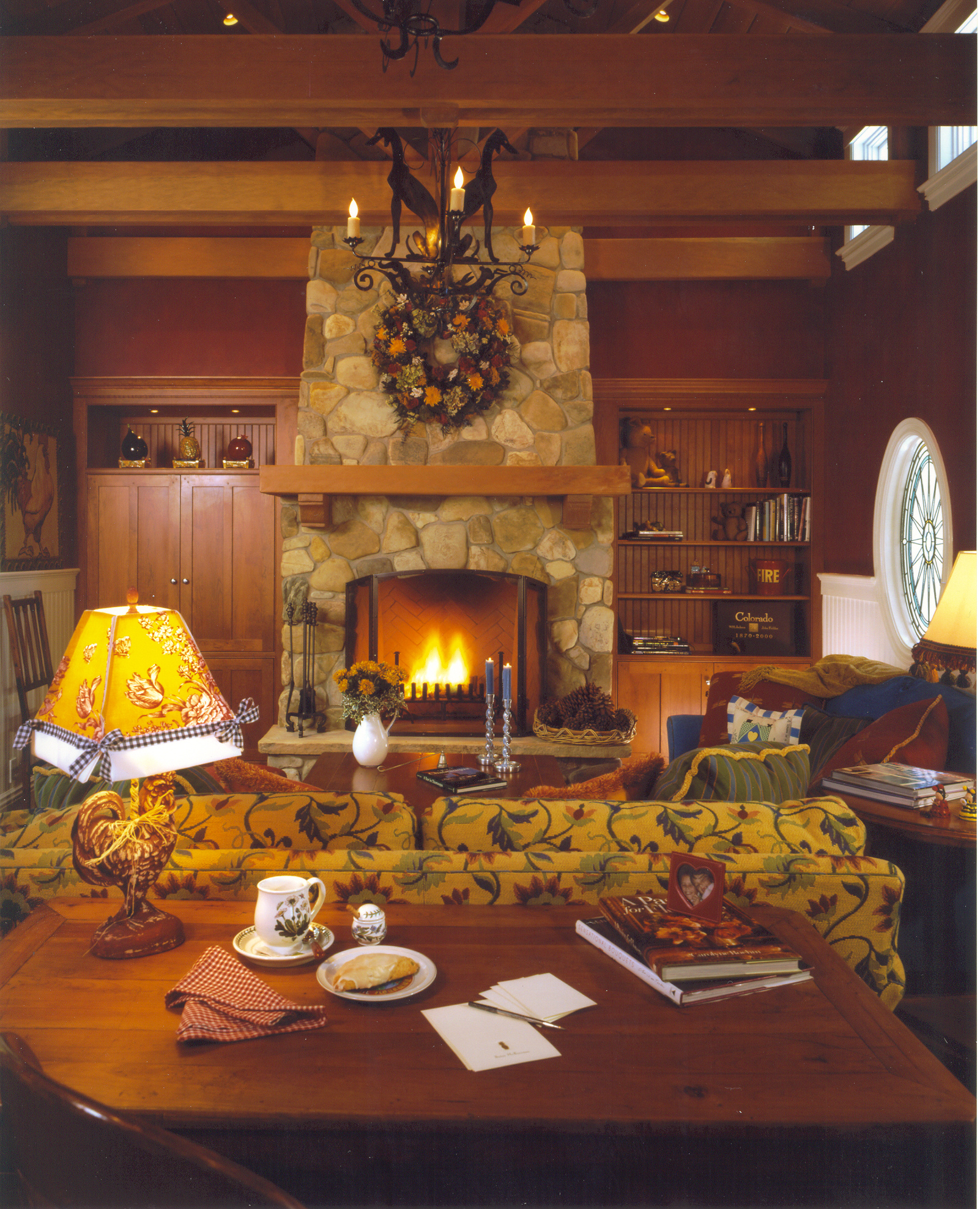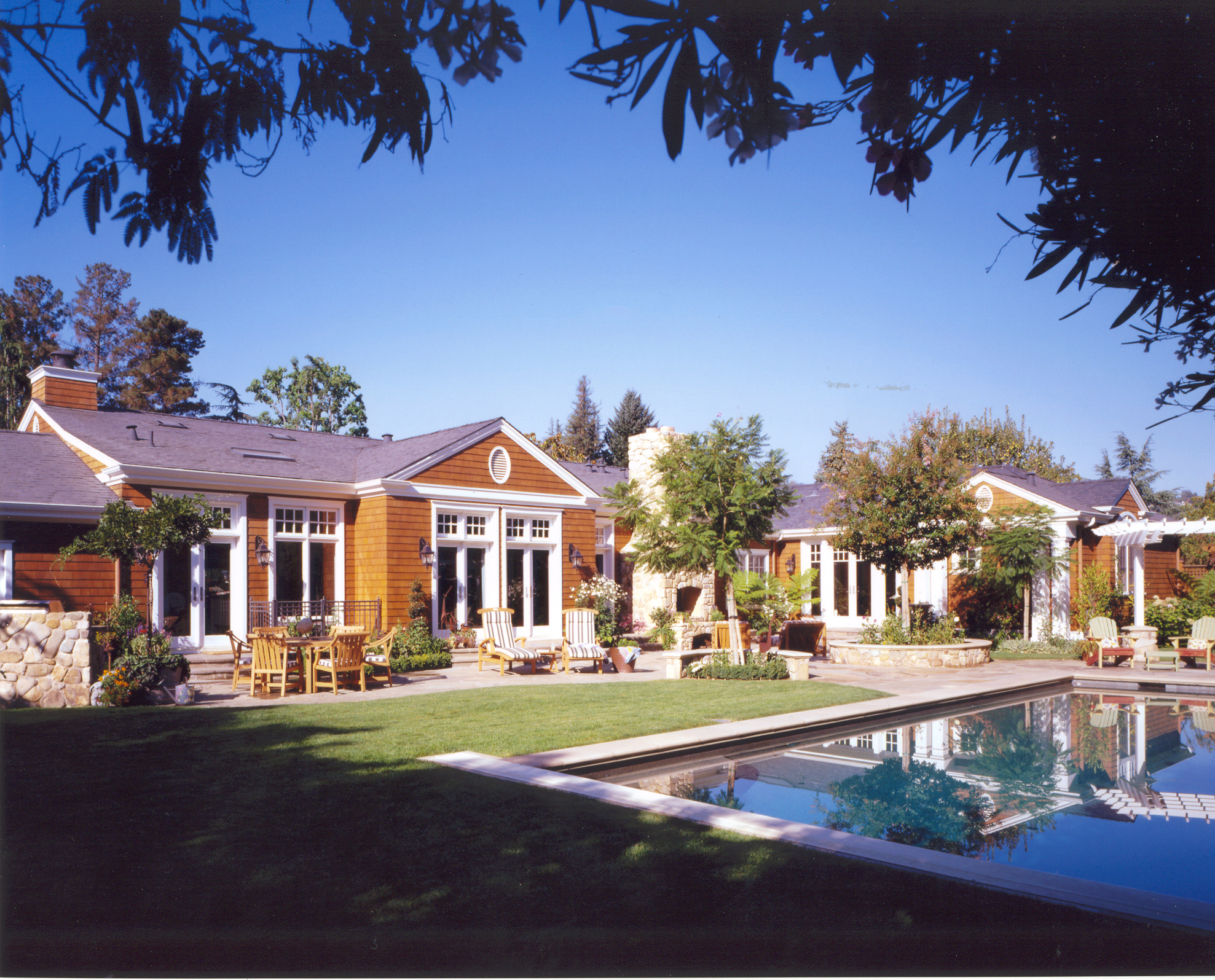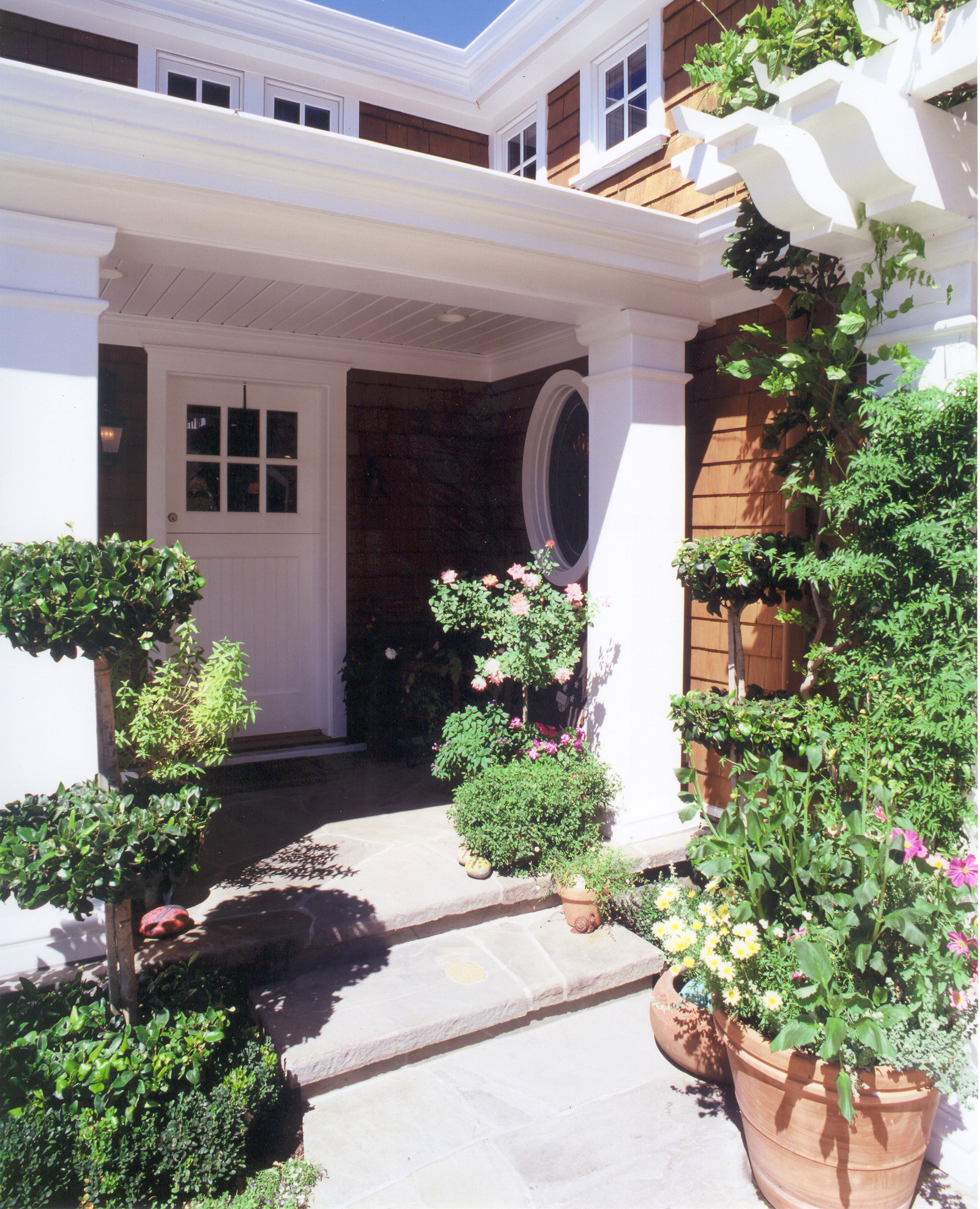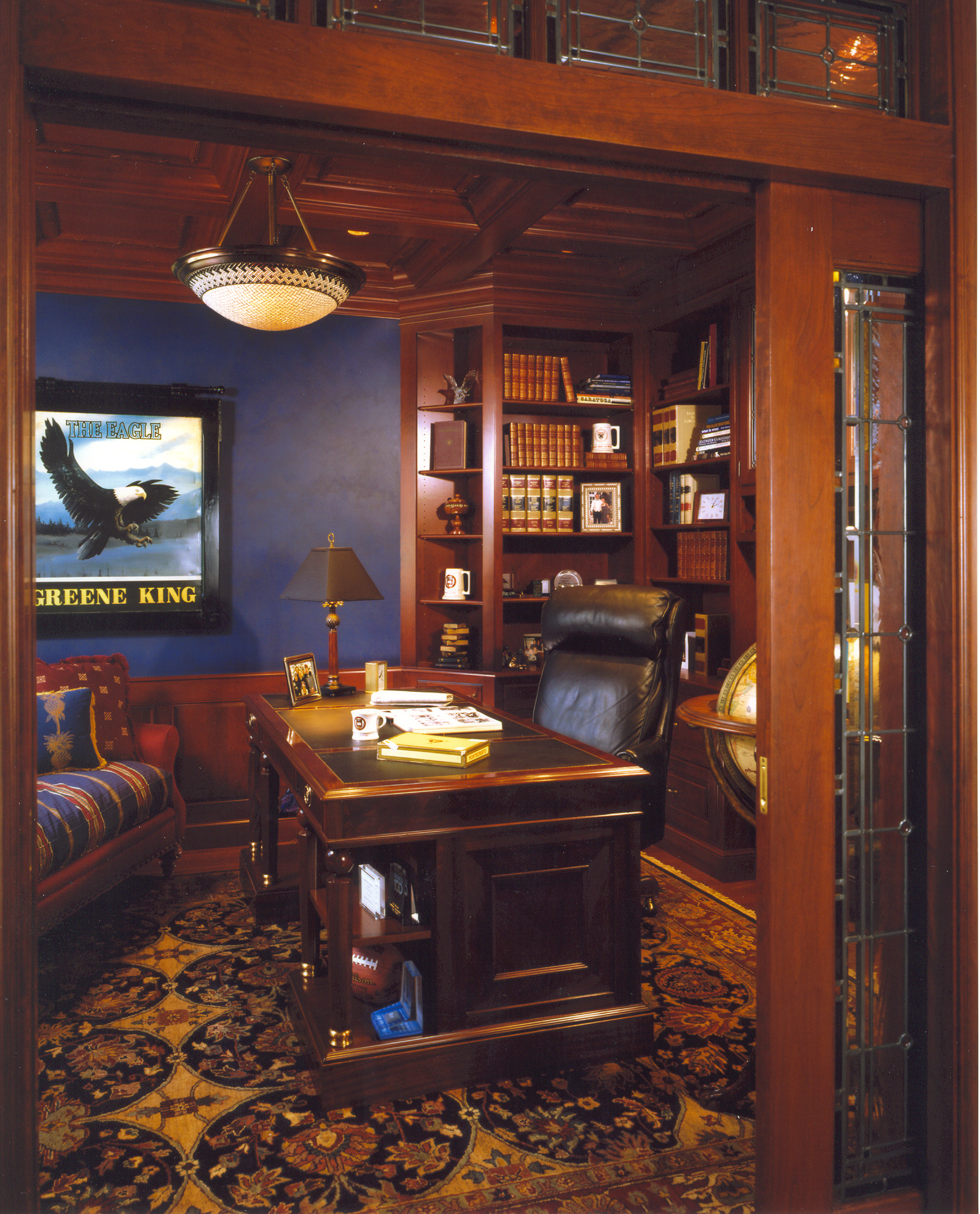
This project was built for a family with seven children, and the design brief that shaped it was almost entirely a function of that number. A house has to work differently at that scale, not just in square footage, but in how circulation, sightlines, and shared spaces are planned so that daily life for a household that size can function comfortably.
Nearly every technical decision in the home, from the stair layout to the choice of materials in high-traffic rooms, traces back to that central challenge: how do you build a home that accommodates seven children and the adults raising them without any one space becoming a bottleneck?
The home was designed by architect Michael Lane, the interiors were done by Gail Salice Interiors, and Dan Singleton served as project manager for Conrado Home Builders.
Distinctive Exterior Details
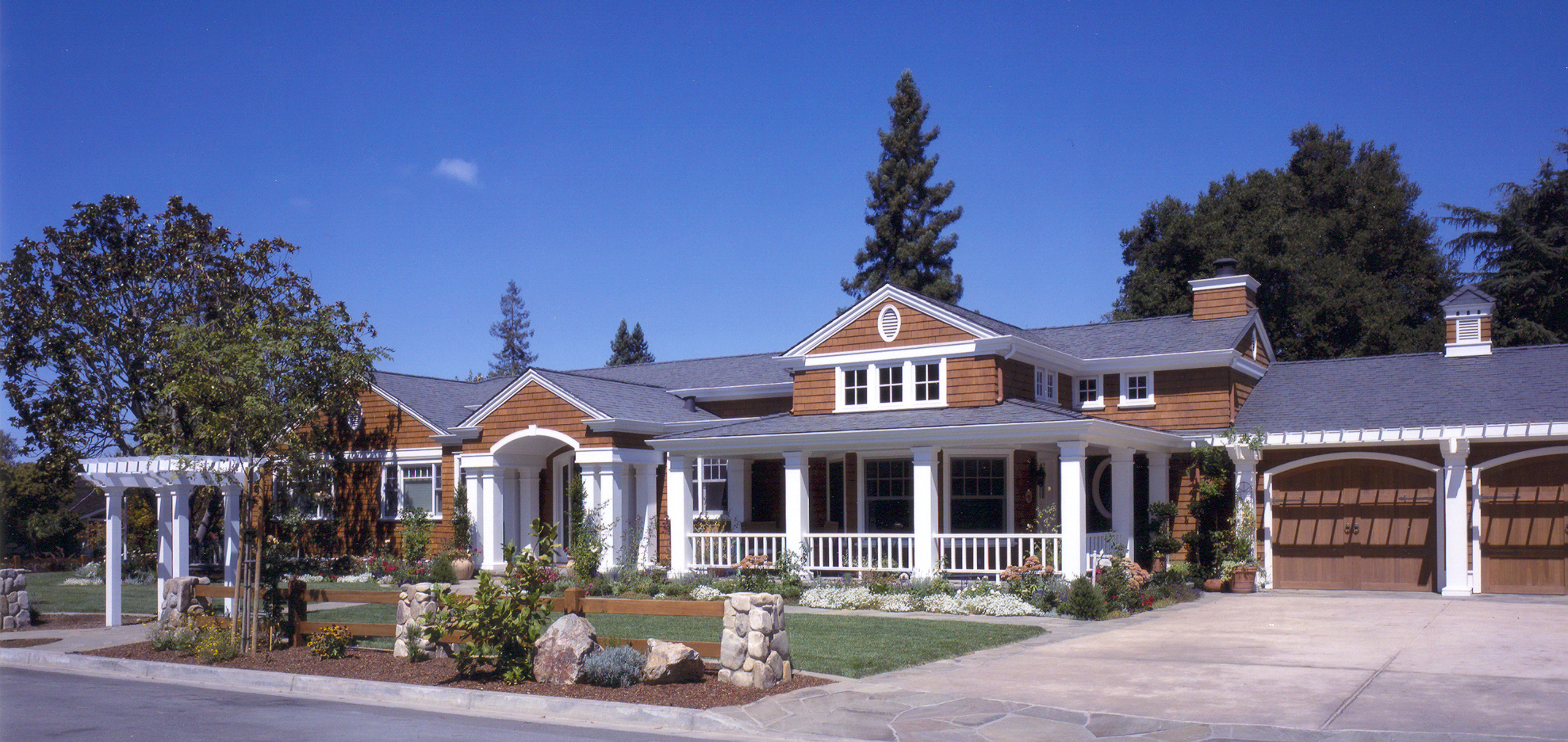
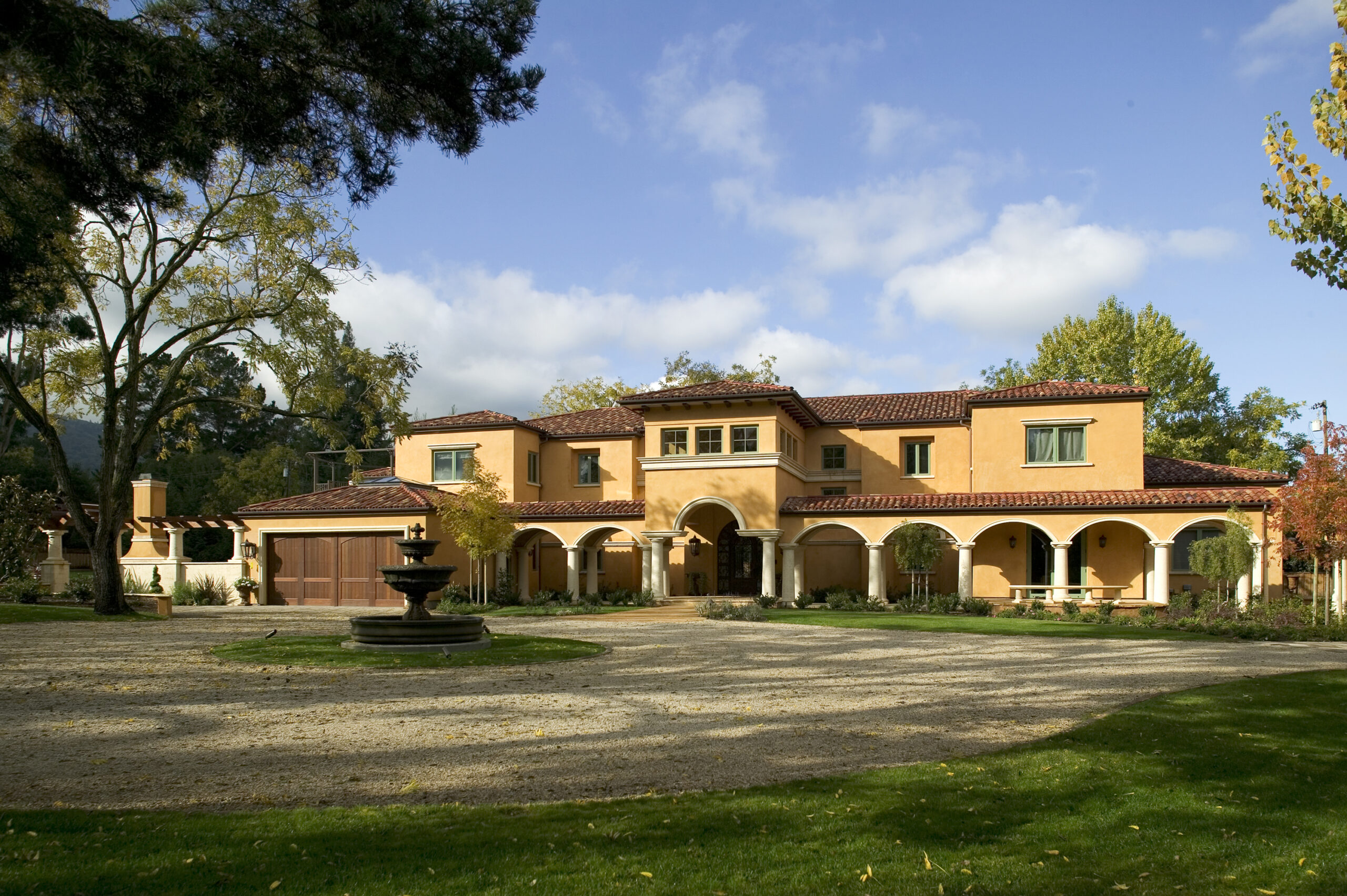
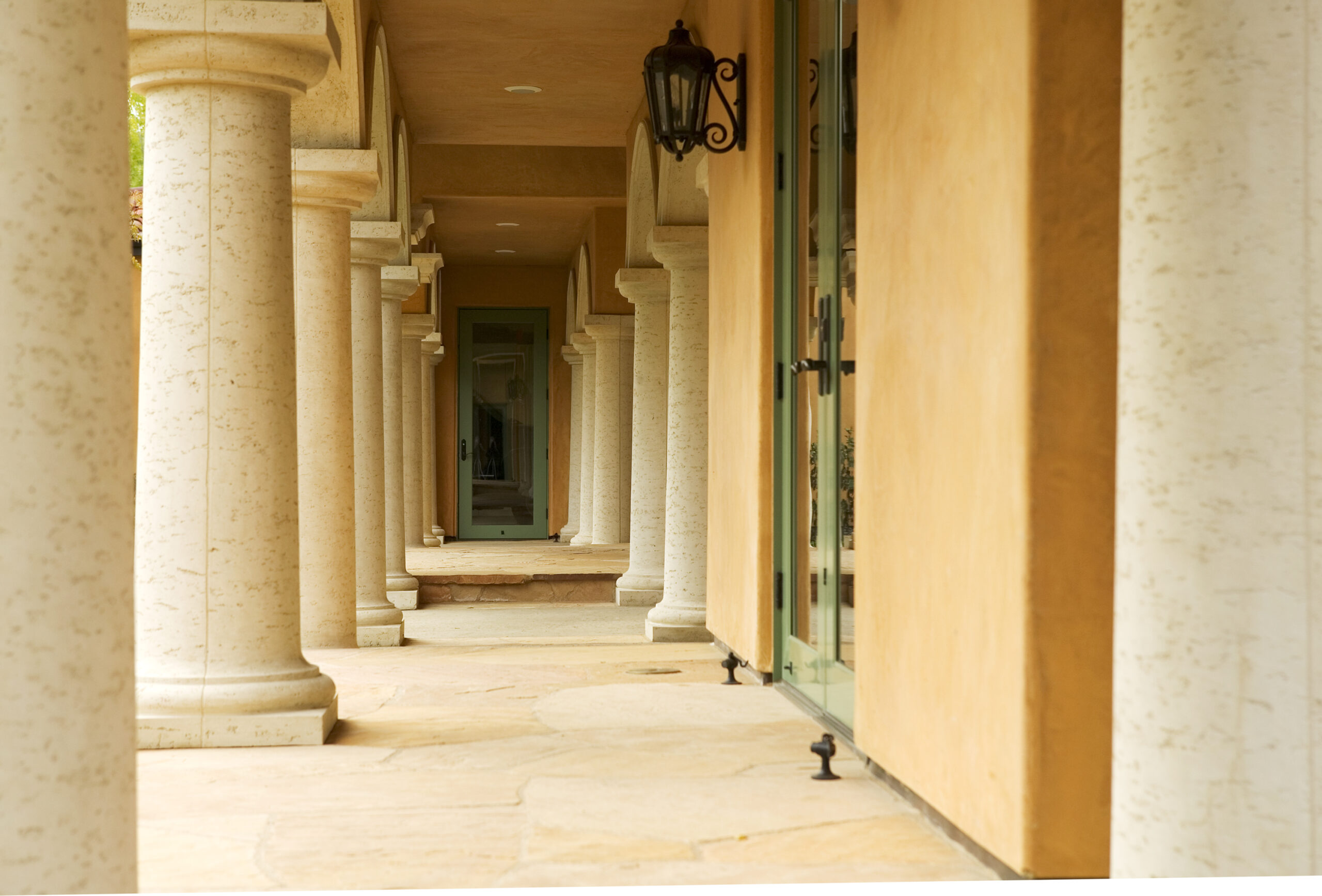
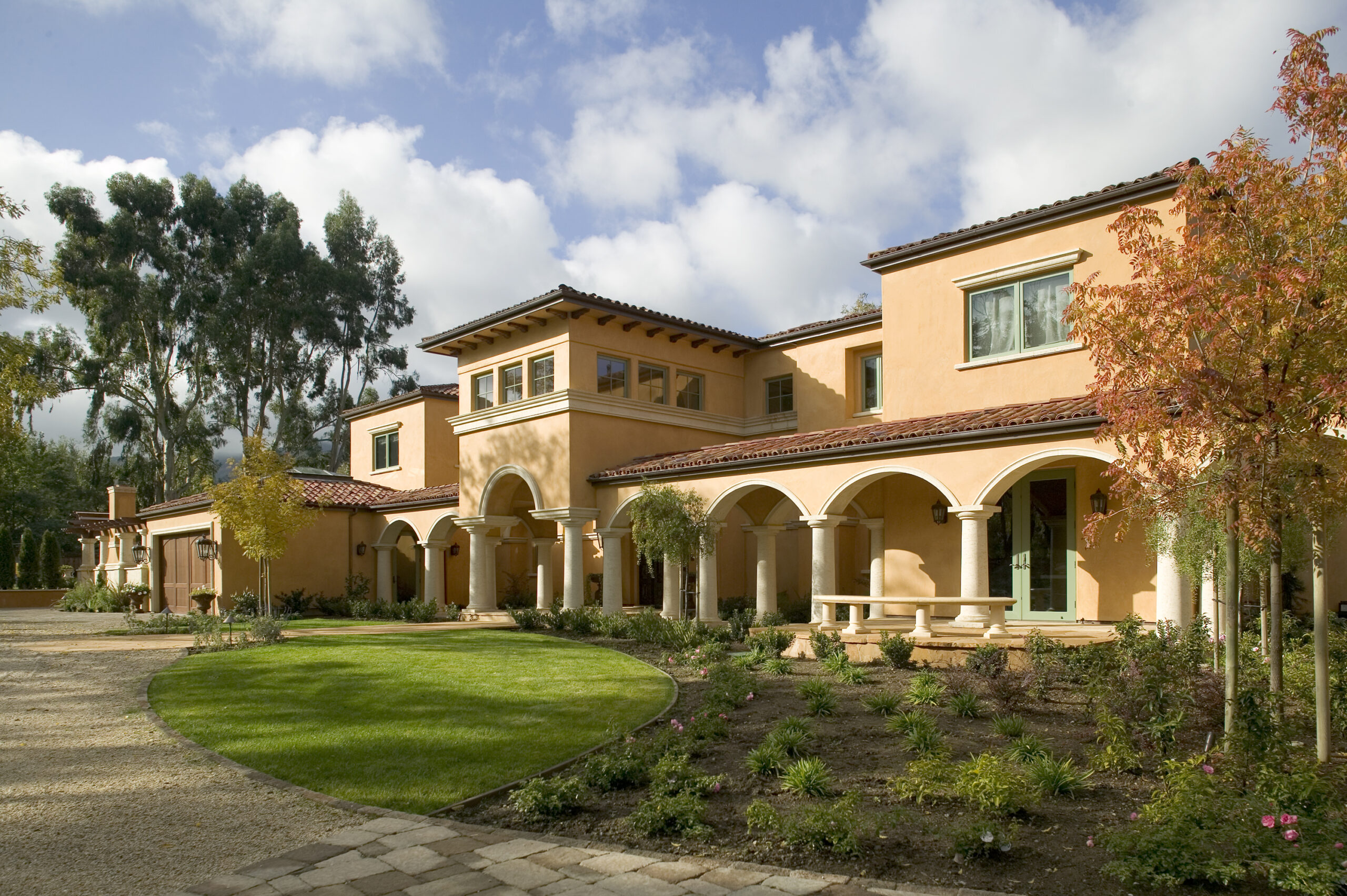
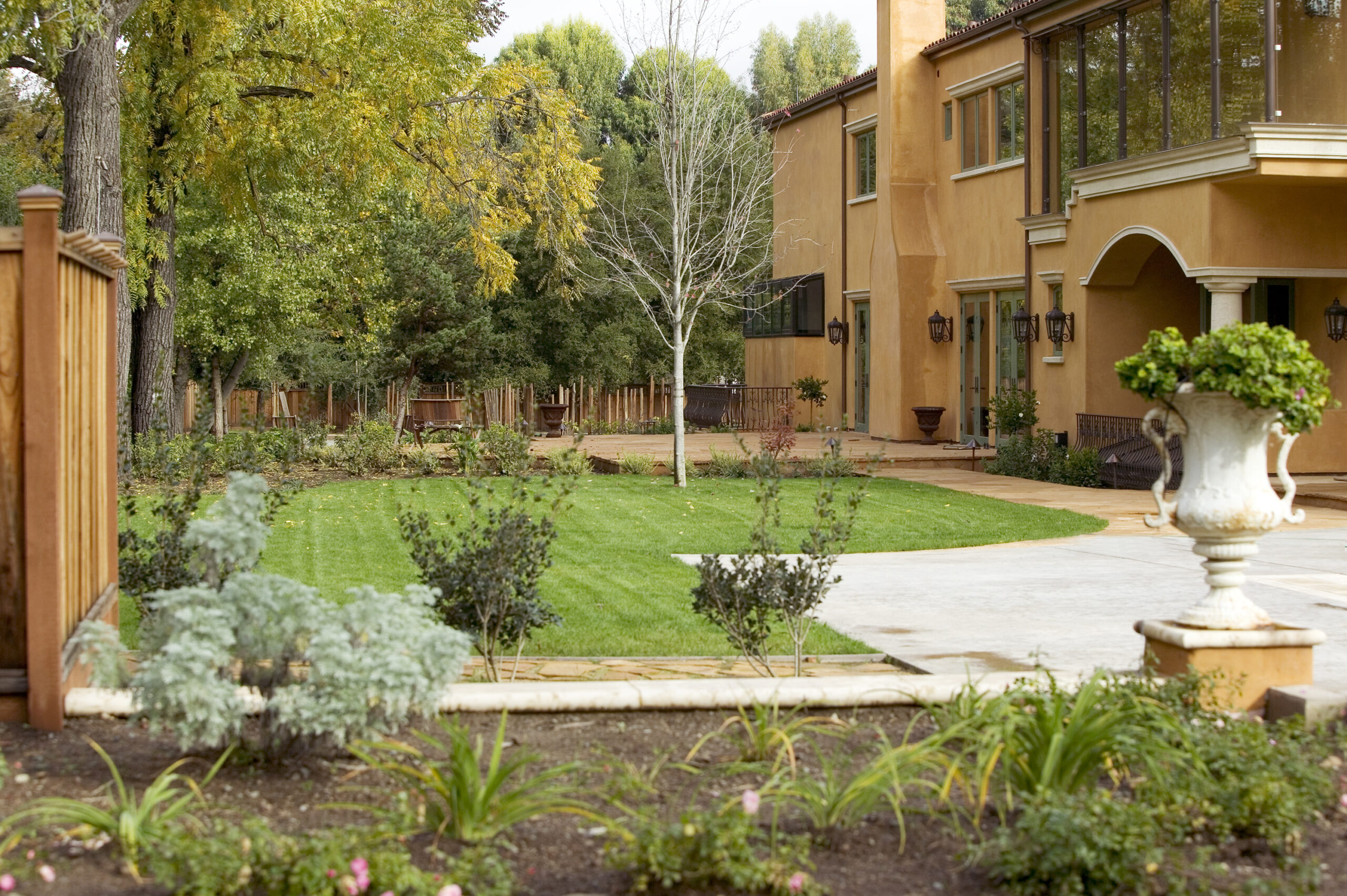
The house is presented in warm ochre stucco beneath a terracotta barrel-tile roof, with sage-green window casings repeated consistently across both stories. That green trim reappears at the entry sequence, where a run of cream stone columns and rounded arches forms a covered loggia leading to the front door.
The front door itself is one of the home’s most distinctive features: a massive circular steel design set within an arched opening and framed by dark ironwork with radiating scrollwork panels of glass. Directly above it, a matching round transom window brings daylight into the entry hall independently of the door.
Fabricating a steel door at that scale and in a circular form presented a very different challenge from a conventional rectangular entry. Its weight, swing clearance, hardware, and weatherproofing all had to be carefully considered.
That same visual language of steel, circles, and curves appears elsewhere on the exterior, particularly at the rooftop deck, where a curved glass and wrought iron railing follows the rounded edge of the home’s tower.
Two Circular Staircases
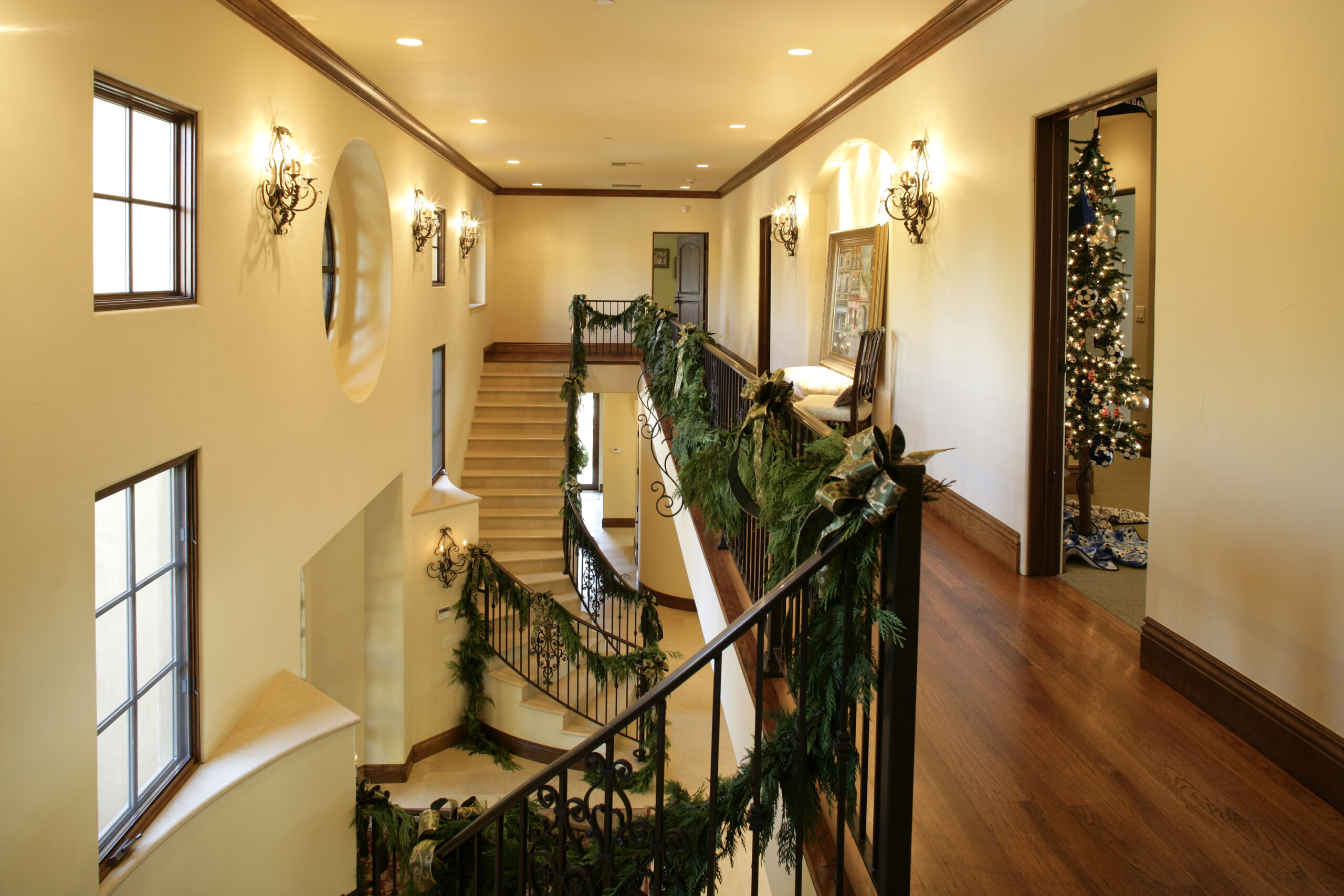
The home used two separate circular staircases to solve two very different circulation problems.
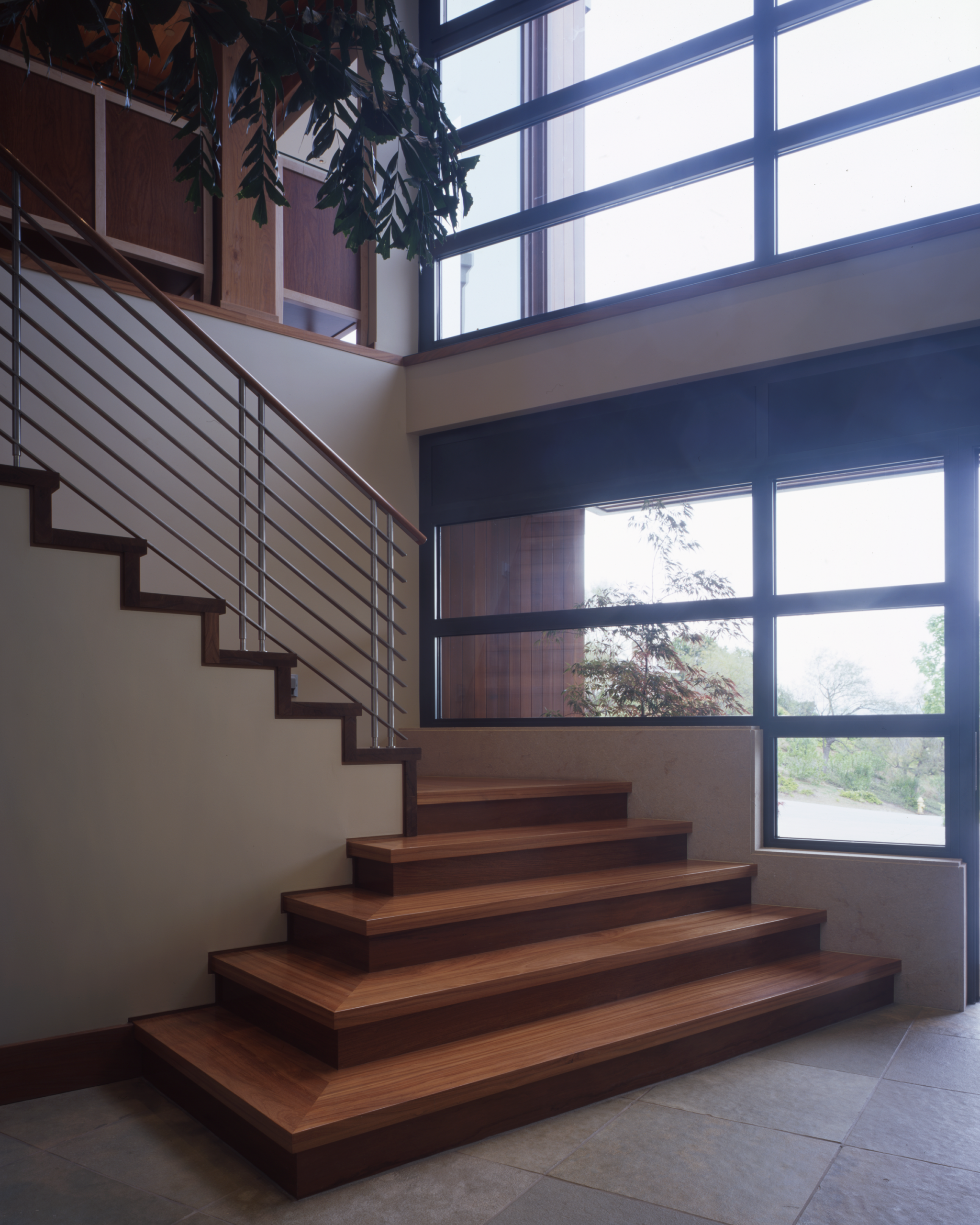
One connected the basement directly to the children’s bedrooms on the second floor. Because the staircase bypassed portions of the main living level, a window was built into the first-floor kitchen wall overlooking the stairwell. From the kitchen, the parents could easily see who was moving between the basement and bedrooms.
A second circular staircase ran from the basement all the way to a rooftop deck. At the top, curved glass panels were incorporated into a wrought iron railing that followed the rounded perimeter of the deck. From outside, the railing wraps around the home’s curved corner tower and reinforces the circular geometry seen at the main entrance.
The Rose Garden and an Indoor Roller Rink
The basement reflected the needs of both the adults and the children.
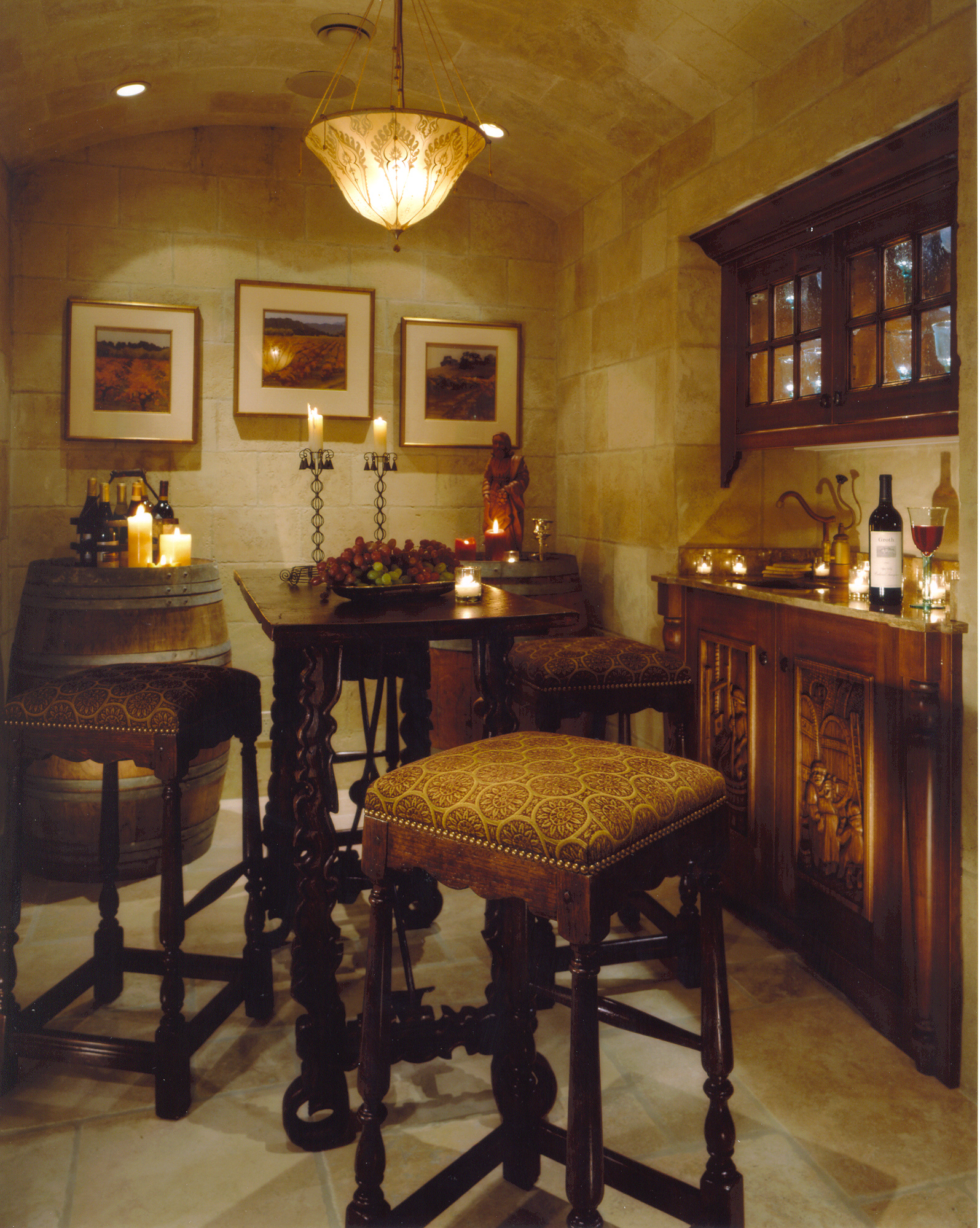
For entertaining, it included a complete Irish pub called The Rose Garden. Rather than simply adding a conventional wet bar, the space was conceived as its own destination within the home, giving the adults a dedicated place to gather and entertain. For the kids, the lower level included something entirely different: a dedicated indoor roller blade room. Elsewhere in the basement, at least one smaller room received an elaborate hand-painted trompe l’oeil treatment. Faux stone blocks, climbing vines, and architectural details were painted directly onto the walls, including a relief-style panel designed to appear as though it had been built into the masonry.
The retaining walls outside the basement received a similar treatment on a much larger scale. Rather than allowing large structural walls to dominate the view from inside, they were finished to visually integrate with the surrounding landscaping.
A Kitchen Built with Unique Materials
The kitchen incorporated several materials chosen specifically for how they would change over time.
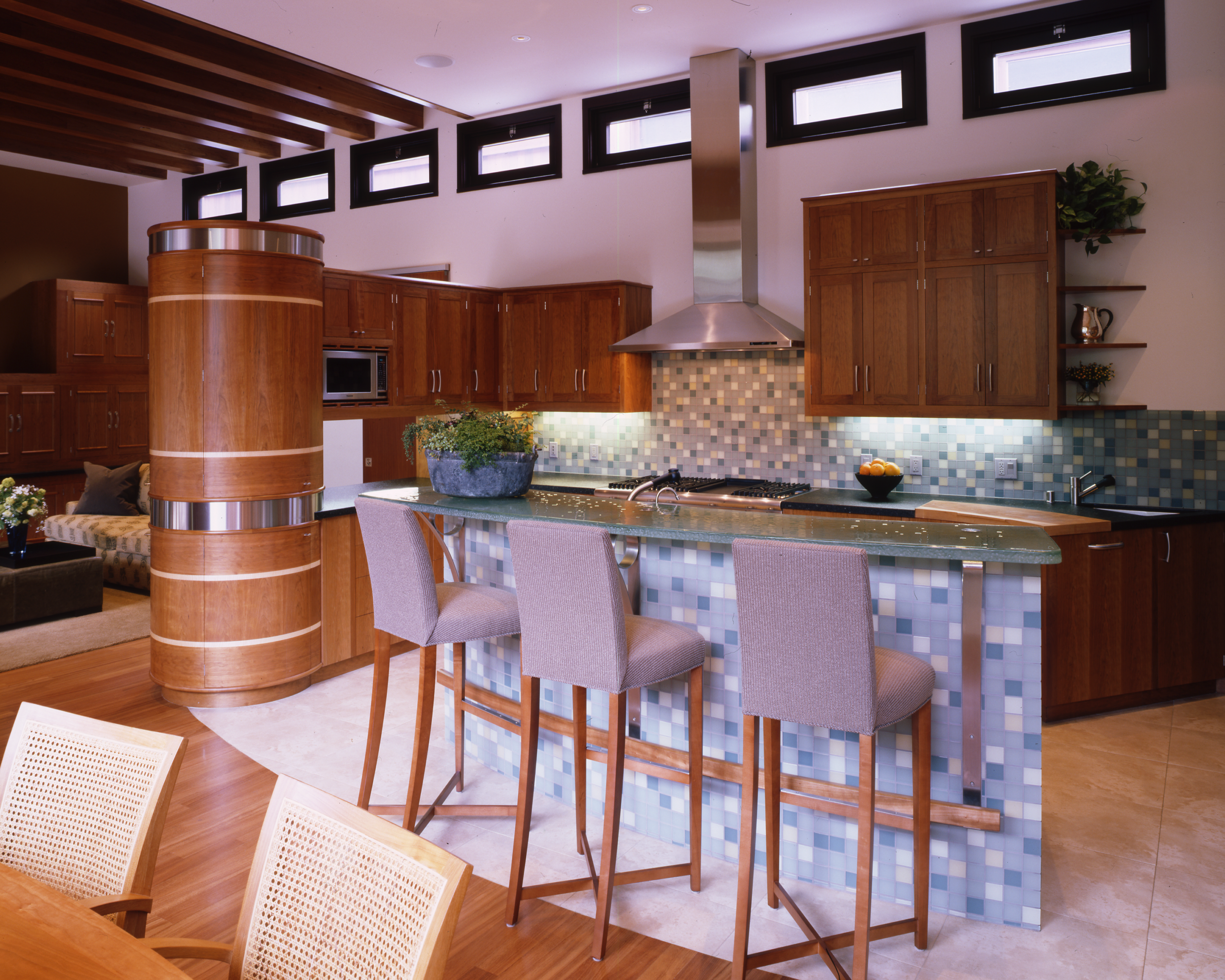
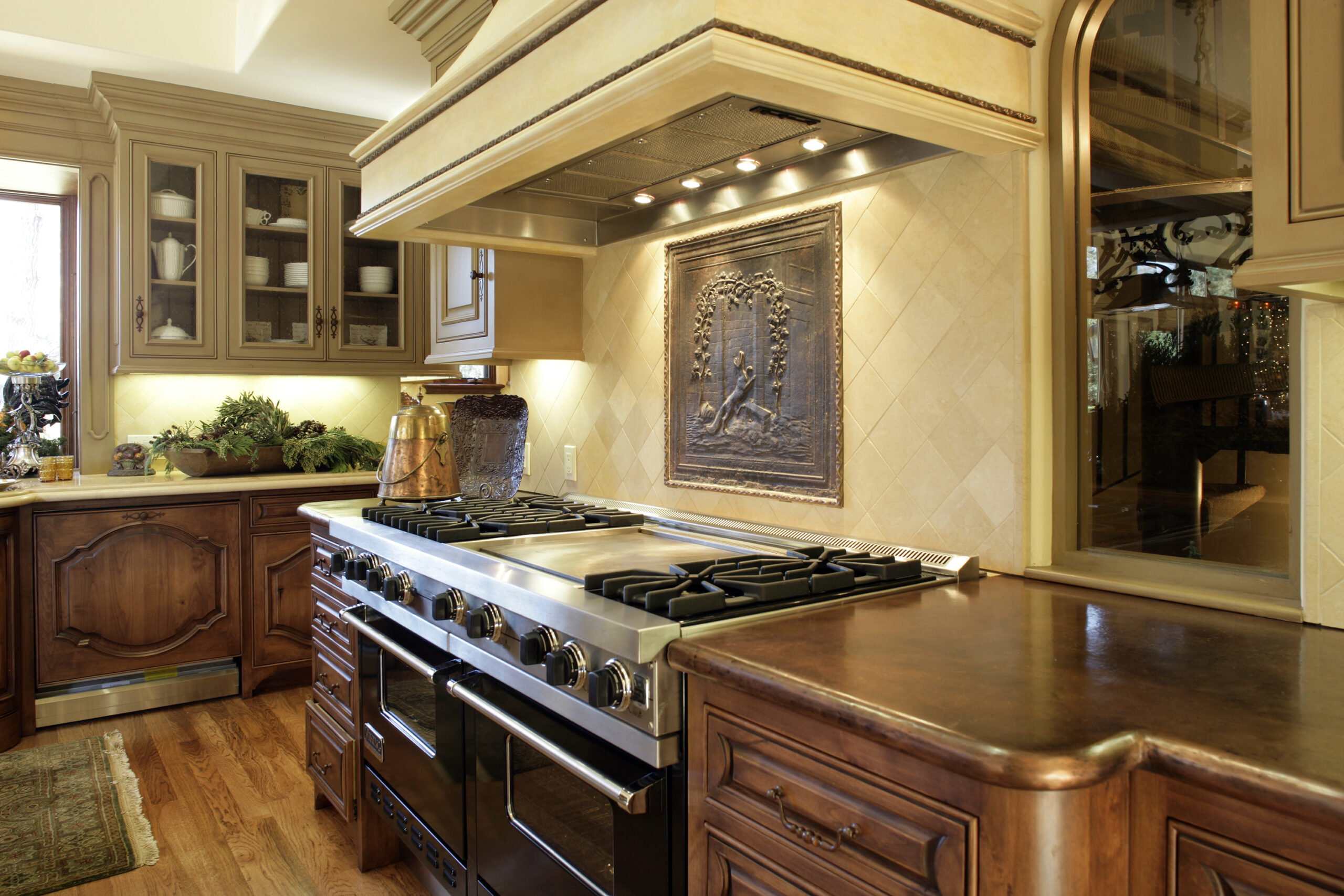
The counter surrounding the range was made from solid copper sourced from Europe. Rather than remaining pristine, copper develops a natural patina as it is touched, cleaned, heated, and used. For a kitchen serving a family of this size, that evolving surface became part of the character of the room. Behind the range was another unusual European element: an antique cast iron fireback originally designed to absorb and radiate heat from a fireplace. Here, it was repurposed as the backsplash behind the cooktop. The dark relief panel, depicting a tree and animal scene, was set into a tiled niche and illuminated by the range hood above. What had once been a functional component of a European fireplace became both a durable cooking surface and an architectural focal point.
Bathrooms Designed for Seven Children
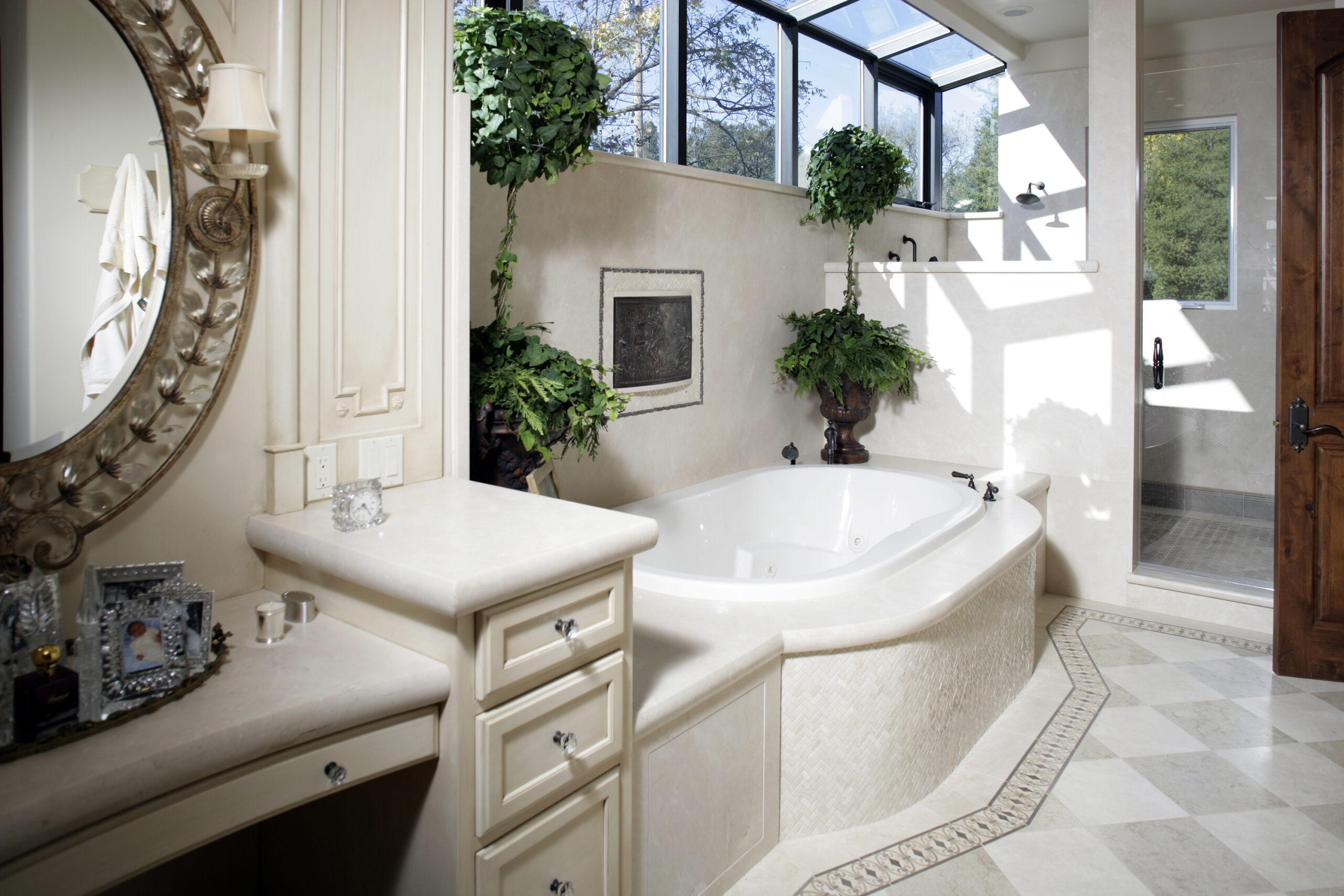
The children’s bathrooms were designed around the realities of a household with seven kids, most of them boys.
Rather than approaching them as conventional residential bathrooms, the spaces incorporated stalls and urinals, allowing multiple children to use the bathroom at the same time.
It’s a layout more commonly associated with a commercial or institutional building than a private residence, but in this house it solved a very practical problem. Morning routines for a family this large required bathrooms that could accommodate several people without creating a line outside the door. The decision is a particularly clear example of what made the project truly custom. Instead of multiplying standard bathrooms throughout the second floor, the team designed shared spaces around the actual volume of daily use.
A Working Cabernet Franc Vineyard
Beyond the house itself, the property was developed as a working piece of land. A Cabernet Franc vineyard was planted on-site, with fruit supplied to Conrado Cellars rather than treated simply as ornamental landscaping. A producing vineyard requires considerations that extend well beyond appearance, including row orientation, drainage, sunlight, and access. Those requirements had to be coordinated with the house, landscaping, and the broader development of the property. The result was a landscape that served a purpose beyond framing the architecture. It became part of Conrado’s own winemaking program.
A Home Designed Around One Family
Taken together, the Monte Sereno Tuscan Family Estate is less a collection of unusual features than a series of specific solutions for one unusually large household. The window overlooking the children’s staircase helped parents keep track of movement through the house. The shared bathrooms accommodated seven children during the busiest parts of the day. The roller blade room gave the kids their own indoor recreation space, while The Rose Garden created a completely separate environment for adult entertaining. Even the materials in the kitchen were selected with heavy daily use in mind.
Designed by Michael Lane and managed during construction by Dan Singleton, the project is a useful example of what custom building can mean at its best: not simply applying a particular architectural style to a property, but designing and building a home around exactly how one family intends to live in it.